
Want to e-mail someone ? firstname.name@inrae.fr
CURRENT
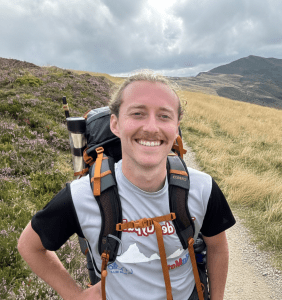
Maxime Descat studies how climate-related events shape morphological traits in salmonids. Using experimental approaches, he investigates whether morphological changes induced by floods and droughts arise from phenotypic plasticity or natural selection, and how these shifts constrain key ecological functions such as swimming, foraging, and behavior. Through the lens of morpho-functional variation, his research links environmental stressors to ecosystem-level consequences.
Status: Graduate
Keywords: geometric morphometrics, phenotypic plasticity, functional morphology, hydrological events, ecosystem functioning
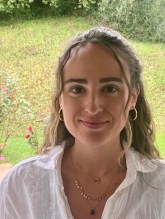 Eva Haristoy studies behavioural and genetic adaptations of lampreys and salmonids to the increasing occurrence of low water conditions, in relation to climate change. To simulate the effect of climate change, she builds experiments where fish have to pick-up the best conditions in terms of water temperature, food availaiblity, but also intraspecific competition, and she tracks the successful behaviours or the genetic variants that achieve a higher fitness.
Status: Graduate
Keywords: behavioural ecology, experimental ecology, selection, stress, heritability.
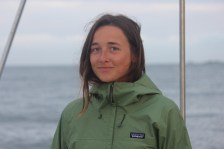
Gaëlle Brahy is interested in the potential for rapid evolution in expanding metapopulations. She studies the relative contribution of demography and selection through various approaches to predict whether life history traits (growth, reproduction, dispersal) should rapidly evolve along recent colonization fronts. She uses the introduction and invasion of the subantarctic Kerguelen islands by salmonids as a case study.
Status: Graduate
Keywords: metapopulation, evolutionary ecology, selection, stress, genomics.
 Ambra d’Aurelio is investigating patterns of phenotypic and genetic variation throughout antropocene, focusing on Brown trout, in relationship with glacial refuges. To do so, she studies archeological samples, extract DNA, infers past body sizes based on vertebrae shapes, in order to describe what was the state of intraspecific diversity in this species over the last millenia.
Status: Graduate
Keywords: genomics, bioinformatics, Brown trout, ancient DNA, morphology.
 Patrick Jacques is studying genomics diversity patterns using a paleogenetic approach in Atlantic salmon and European eel. Part of his goals is to unravel the genomic diversity in these two species thousands of years ago, using ancient DNA samples extracted from archeological samples, and to analyze whether the methods of inference on present genomic data are really able to accurately reconstruct past genomic and demographic events.
Status: Graduate
Keywords: bioinformatics, genomics, Atlantic salmon, European eel, ancient DNA.
FORMER STUDENTS

Edel Lheureux works on a Bayesian model of the life cycle of a wildlife population of Atlantic salmon (Salmo salar). She studies the evolution of the phenology of migration of this population during the last 15 years, linked with the environmental conditions. Then, these results will be used to make some projections of the population dynamic in the context of the climate change .
Status: Graduate
Keywords: modelling, phenology, Atlantic salmon, climate change, population dynamics.
Personal page: https://fr.linkedin.com/in/edel-lheureux-b431181b8
Mélanie Debelgarric is specialized in modelling of ecological systems. Her thesis research focuses on the role of bioenergetic mechanisms as evolutionary constraints when facing stochasticity and extreme events. For that, she uses the Dynamic Energy Budget (DEB) model theory and genetic models to predict the impact of global changes on freshwater individuals and populations.
Status: Graduate
Keywords: environmental variability, modelling, phenotypic plasticity, bioenergetics, DEB theory.

Stellia Sebihi started her thesis in October 2021. She studies the role of stress and the effects of a benzodiazepine (Diazepam) on the facultative migration of the European glass eel (Anguilla Anguilla). This involves carefully planned experiments allowing to pinpoint how toxics may modify the finely tuned internal clocks controlling swimming activity in glass eels.
Status: Graduate
Keywords: Facultative migration, experimental ecology, glass eel, stress, benzodiazepine.
Personal page: https://www.researchgate.net/profile/Stellia-Sebihi https://www.linkedin.com/in/stellia-sebihi-90a542193/
 Léa Daupagne started her thesis in September 2020. She studies the structure and the dynamic of mating networks in lampreys throughout the breeding season by combining both an empirical and a theoretical approach. This will notably include studying the prezygotic reproductive isolation between closely-related parasitic and non-parasitic species.
Status: PhD. Now Post-Doc at Stockholm University, Sweden.
Keywords: mate choice, sexual selection, multilayer network analysis, polygynandry.
 Loïc Baumann focuses on unravelling the ecology of the first life stages of shads (Alosa alosa), and on assessing to what extent these stages are sensitive to various environmental degradations, such as habitat modification or hypoxia events. Loïc investigates in particular the behavioural and stress responses to these factors.
Status: PhD.
Keywords: behaviour, ecology, conservation, restoration, stress, shad.

Marius Dhamelincourt studies the mating systems in lampreys species, using in natura observations and experimental approaches. He also investigates the relationship between habitat and mating behaviour, and the impact on the ecosystem.
Status: PhD. Now Research Engineer at The French Office for Biosiversity.
Keywords: reproductive system, experimental ecology, lampreys.
 Amaïa Lamarins works on the portfolio effect in Atlantic salmon metapopulations, using the demogenetic model IBASAM. She studies how the metapopulation structure can bolster the resilience of populations through dispersal, local adaptation and management practices.
Status: PhD. Now Post-Doc at Craig Primmer’s lab, Helsinki, Finaland.
Keywords: demogenetic, modelling, metapopulations, salmon.
 Dorinda Folio works on the dynamics of hybridization between Atlantic and Mediterranean lineages of brown trout. She’s developing an individual based model simulating the demogenetic dynamics of populations, accounting for both management actions (fishing, restocking, connectivity) and evolutionary feedback.
Status: PhD.
Keywords: demogenetic, modelling, biodiversity management, brown trout.

Lucie Aulus begins a thesis on the evolution of life history traits along a colonization gradient. She’s focusing on the case of growth and its effect on age at sea migration in introduced brown trout of the Kerguelen Islands.
Status: PhD. Now Post-Doc at University of Lausanne, Switzerland.
Keywords: reaction norms, natural selection, long term monitoring.

Clément Lebot just started his thesis, he is focusing on wild Atlantic salmon management. Thanks to population dynamics modelling, he will evaluate the impact of different management strategies on Atlantic salmon conservation.
Status: PhD. Now Research Engineer at the French Office for Biodiversity.
Keywords: population dynamics, stock recruitment, hierarchical modelling, sustainability.
Louise Chevalier started recently her thesis on the co-evolution of genome and traits or behaviour involved in sexual selection. Her approach is mainly theoretical and seeks to overcome the classical phenotypic gambit used in behavioural ecology.
Status: PhD
Keywords: demogenetics, adaptive dynamics, sexual selection, mate choice

Hengtong Liu‘s thesis topic revolves around energy metabolism in European glass eel, and its effect on migratory behaviour. She develops an integrative approach from genes to behaviour, with a specific focus on autophagic mechanisms.
Status: PhD
Keywords: migratory behaviour, transcriptomics, metabolism.

Elorri Arrevalo obtained her PhD in our lab, in co-supervision with Ecology Department of the University of Pays Basque in Bilbao. She investigated the possible match/mismatch hypothesis between salmonids and their macroinvertebrates feeding resources in the context of Climate Change, and thereby discharge and temperature dynamics modifications.
Status: PhD (2014-2017) – Now Postdoc at AZTI, Spain.
Keywords: trophic interactions, salmonids, hierarchical modelling.
 ECOBIOP